Define the load and runtime window
- What is the continuous and peak amperage for tools, HVAC backups, or charging stations?
- How many hours between refueling or battery swaps are realistic with Winston-Salem traffic patterns and site access windows?
- For mixed loads, confirm whether voltage regulation and clean power are required for controls or lab equipment often found in local biotech and healthcare facilities.
Indoor vs. outdoor placement
Indoors at large campuses and renovated factories, emissions and noise quickly narrow options. Electric distribution from an exterior generator—running cabling to panels or spider boxes—can meet indoor needs while respecting ventilation constraints and floor load limits common in older concrete decks.
Outdoors, rolling grades and moisture-prone clay require stable, level spots for both generators and towers. Soft or saturated areas near utility trenches and new pads may increase ground pressure. Plan placement on well-compacted surfaces with clear cable routes that avoid forklift aisles or lift swing radii.
Light coverage and mast height
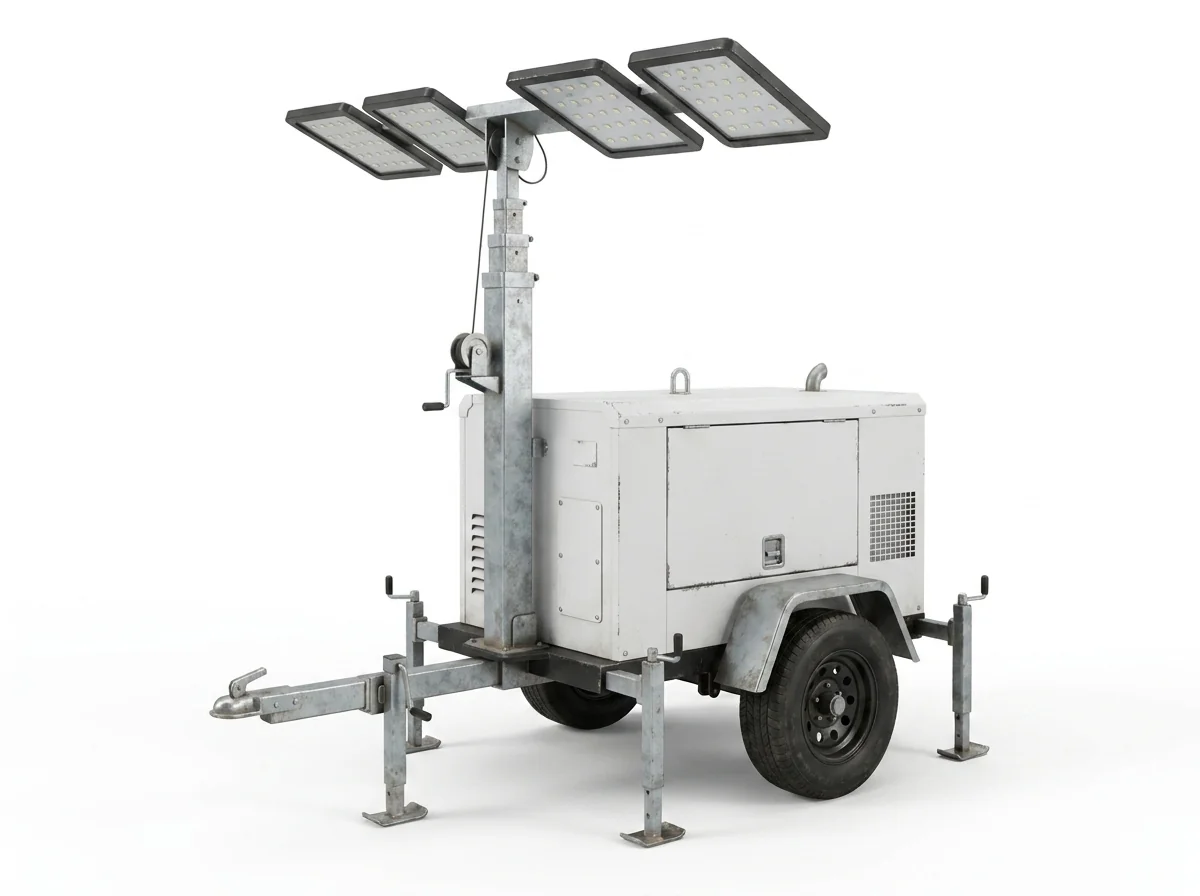
High-bay warehouses around regional logistics operations call for uniform illumination over long aisles and dock aprons. Compare required foot-candles to mast height and optic type. Wider lots may favor multiple shorter towers staged along circulation routes rather than a single tall mast exposed to crosswinds. Actual conditions and the selected unit’s instructions govern acceptable setups in open areas.
Fuel, power quality, and noise profile
- Fuel type and tank size dictate service intervals; account for overnight temps, humidity, and condensation prevention.
- Sensitive electronics in labs or controls in modern facilities benefit from tighter voltage regulation and low total harmonic distortion.
- Night work near neighborhoods or historic cores often demands quieter packages and strategic placement behind structures.
Coordination with aerial access and material flow
Lighting plans should complement lift work, not conflict with it. Verify that towers and cabling do not block routes for scissor lifts or booms used on façade, MEP, or racking work. For indoor-access needs, compare with options at /electric-scissor-lift-rental/ and /vertical-mast-lift-rental/. For exterior staging across uneven grades, see /rough-terrain-scissor-lift-rental/ and /boom-lift-rental/.
Quick site checklist
- Load profile: amperage, surge, and sensitive circuits
- Runtime window and refuel/charge plan
- Placement area: slope, soil condition, drainage
- Light pattern relative to active work zones and wind exposure
- Cable routing clear of material handling and lifts
- Noise and exhaust limits in occupied facilities
Local planning note
In Winston-Salem’s humid seasons, moisture can affect connectors and temporary panels. Specify weather-resistant distribution and sheltered placement to reduce downtime.